
 Español
 Русский
 Deutsch
 Português (Brasil)
 Français
 Italiano
White House strategic tour: Trump stops the conflict with Iran until November
Target description: Donald Trump said the U.S. will not attack Iran before the November elections after having productive talks with Tehran.

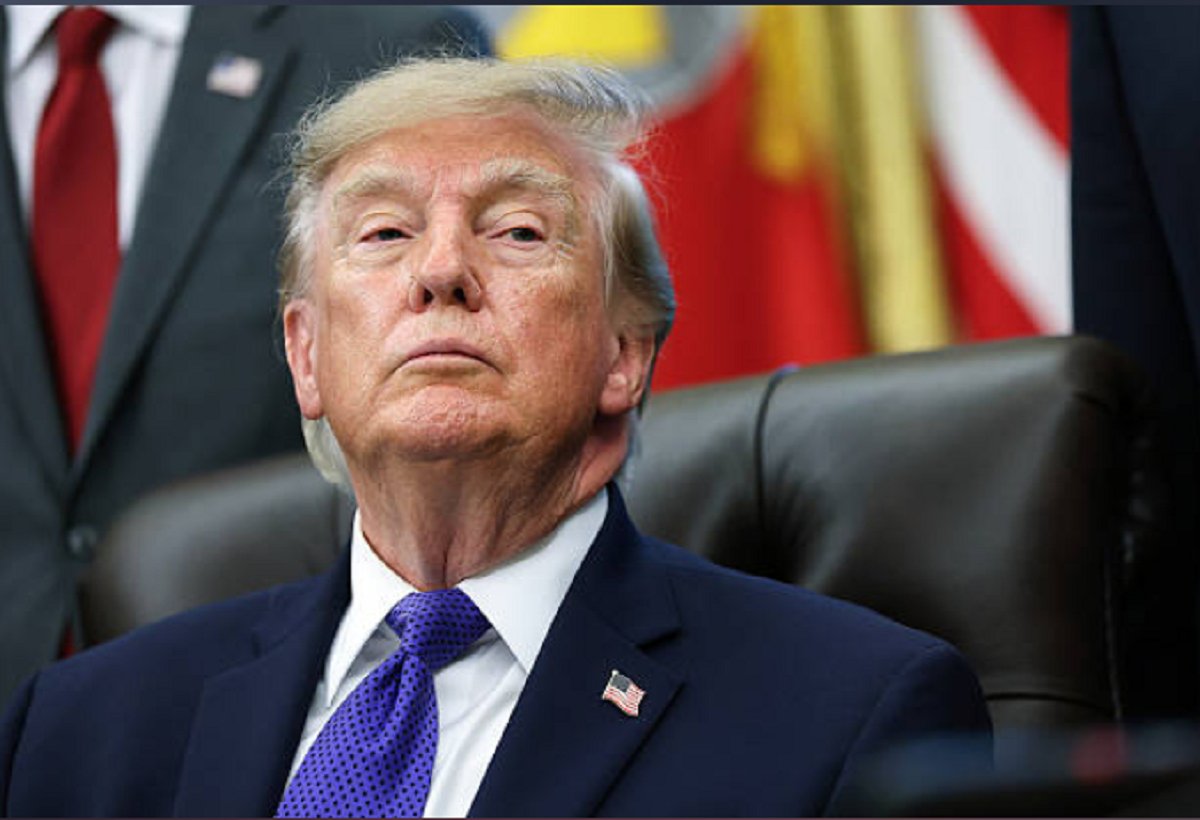
The US president said there will be no military operations before the November legislative elections and confirmed “productive talks” with Tehran in the midst of the oil crisis.
The global geopolitical board took an unexpected tactical turn when US President Donald Trump ruled out to order new attacks on Iran before the mid-term elections on November 3. Through a message in his account of Social Truth, the American president reduced the decibel of the open military confrontation by revealing that Washington maintains open channels of dialogue and “productive talks” with the Tehran authorities, although he warned that the fierce blockade on Persian oil in the narrow Ormuz strategic will remain firm.
This temporary brake on the war escalation occurs at a time of extreme global economic sensitivity, marked by the increase in fuels that hit directly in the pocket of American citizens. With the Republican Party playing the control of Congress in the polls and polls reflecting popular dissatisfaction with the cost of living, the White House strategy seems to prioritize internal stability against the war drums in the Middle East.
Historical and comparative history of tension in the Gulf
The confrontation between the United States and Iran drags decades of dismeetings, economic embargoes and geopolitical pulses for energy dominance in the Middle East. However, the current scenario differs from previous crises due to the direct impact of modern armed conflicts on the global crude supply chain and international public opinion. Historically, U.S. administrations have measured with great caution the political and economic costs of opening up long-term war fronts in electoral years, aware that inflation and fuel prices are often implacable judges in the polls.
Over the past few months, the deployment of aircraft carriers and additional military resources in the region – such as the movements around the Persian Gulf – kept the world on the verge of an unforeseeable scale conflict. Despite the cross-threats and recent incidents that raised the tension to the maximum, Trump’s announcement marks a tactical pause that retakes the old maximum pressure diplomacy combined with electoral speculation, a classic Washington foreign policy manual.
Regional analysis and impact on the Latin American board
Although a war in the Persian Gulf seems distant to Latin America, its expansive waves immediately shake the economies of the region through oil price volatility and imported inflation. Each override on international maritime routes has an impact on the cost of transport, energy and mass consumption products in Latin American countries that already carry their own macroeconomic challenges.
For the governments of the region, the truce announced by the White House represents a momentary relief against the risk of an uncontrolled global energy crisis. In turn, international analysts point out that the geopolitical movements of the great powers always condition the room for manoeuvre of the emerging countries, recalling that global economic stability depends on fragile political balances tied to the electoral calendars of the northern hemisphere.
Official statements and the electoral background
In his statement, Trump described Iran as a country in a “very delicate” situation both economically and militarily, while highlighting the record flow of barrels of crude oil that cross the Strait of Ormuz without directly involving Tehran. However, the Republican leader ratified one of his historical red lines by insisting that the Islamic Republic “will not have a nuclear weapon,” thus justifying the sustained pressure on the Persian regime.
Voices from the US political environment warn that the decision to pause military actions is a genuine fear that the crisis in the Middle East will end up ejecting the Republicans from the legislative power. The recent controversy over the economic impact of the war and the wear-off of the crews deployed in the area forced the administration to recalibrate its speech, prioritizing a waiting bar until the November elections passed.
Future projection of a pause conflict
The political horizon after 3 November remains in a dense fog of uncertainty. While the discursive truce momentarily decompresses the war tension in the Persian Gulf, the structural knots of the Washington-Tehran conflict are far from being resolved in a definitive manner.
In the future, the outcome of the legislative elections in the United States will not only define the internal power map of the United States country, but will lay the foundations on which negotiations on the Iranian nuclear programme and the control of global energy routes will be resumed or broken. For the ordinary citizen, in both the north and the global south, the great unknown remains whether this electoral pause will result in a lasting peace or only the prelude of a delayed storm.