
 Español
 Русский
 Deutsch
 Português
 Français
 Italiano
Are you playing with fire? Does Iran already have the atomic bomb?
The uncertainty about Iran & apos; s nuclear programme is growing in the face of the lack of inspections, reconstructed facilities and the possible departure from the NPT.

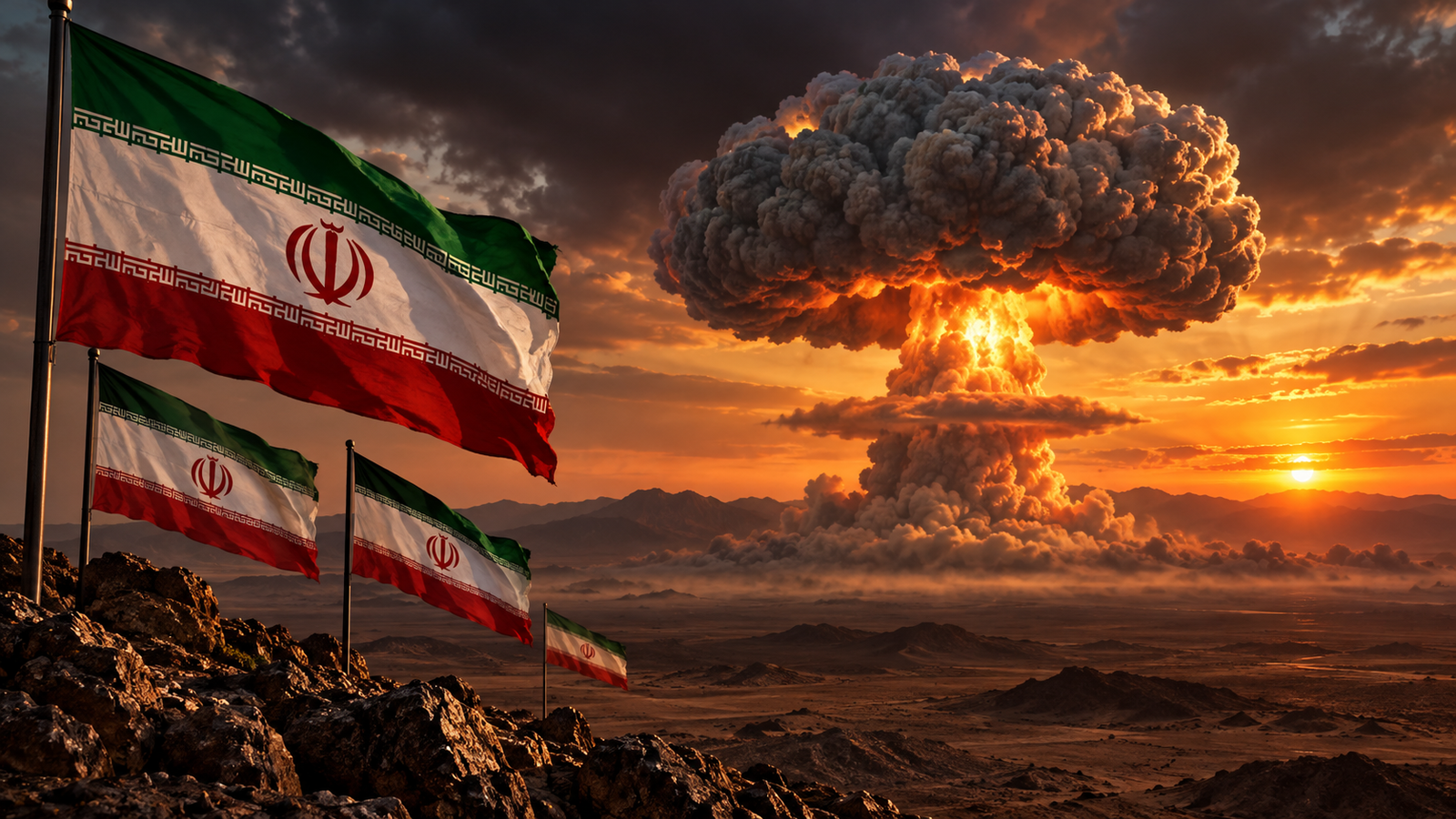
Among uncontrolled uranium reserves, reconstructed facilities under the mountains and the shadow of a possible exit from the international pact, the real state of Tehran’s atomic project reveals the world.
Iran’s nuclear program is going through its darkest and most enigmatic hour. While Tehran is seriously assessing the possibility of withdrawing from the Nuclear Non-Proliferation Treaty (NPT), doubts about the actual stocks of enriched uranium and the low level of supervision of the International Atomic Energy Agency (IAEA) draw a scenario of total uncertainty. Added to this are recent satellite images that confirm intense work in damaged underground facilities, stirring the ghost of an arms race unleashed in the Middle East.
The diplomatic scene is walking through the ledge. On the one hand, the Iranian President, Masoud Pezeshkian, slides an alleged willingness to dilute uranium if a comprehensive agreement is reached; on the other, hard sectors of the regime ensure that the attacks of the United States and Israel have already grown enough to break definitively with international regulatory frameworks. The lack of access of inspectors to key military bases leaves intelligence agencies blind, without being able to say with certainty whether the Persian regime crossed the final line towards the manufacture of an atomic bomb.
Iran is rapidly rebuilding a secretive military facility linked to its nuclear weapons programme that was destroyed by Israeli bunker-busting bombs, new satellite imagery reveals
🔗 https://t.co/4vJgT4ikVV https://t.co/ERObCguQJg
— The Telegraph (@Telegraph) September 18, 2026
Historical and comparative history of the nuclear pulse
The push for Iranian atomic development is not new and drags decades of tensions, economic sanctions and failed pacts. The most remembered milestone was the 2015 agreement – known as the Joint Comprehensive Action Plan (JCPOA) – which sought to freeze Tehran’s nuclear aspirations in exchange for financial relief, a pact that was wrecked in 2018 when Donald Trump’s first government decided to withdraw the United States from the negotiating table.
Unlike that stage of diplomatic restraint, the current scenario is marked by the direct aftermath of an open military confrontation that hit the Persian country with force. The bombing of strategic complexes such as Natanz and Parchin, together with the fall of key figures of the military and religious dome, completely altered Tehran’s national security calculations, burying the old political brakes that moderated the regime’s technological career.
Regional analysis and impact in Latin America
Although a nuclear conflict in the Persian Gulf seems geographically distant to Latin America, its economic and geopolitical expansive waves have a direct impact on the global board. Volatility in energy markets, increased international freight and the continuing threat of a global oil crisis hit the fragile Latin American economies, which suffer from imported inflation and volatile commodity prices.
In turn, international analysts warn that the nuclear proliferation and collapse of international disarmament treaties erode the rules of international law, leaving emerging countries exposed to the hegemonic tensions of the great powers. Security in the southern cone is also conditioned by an increasingly militarized and polarized world, where multilateral diplomacy loses ground against the logic of force.
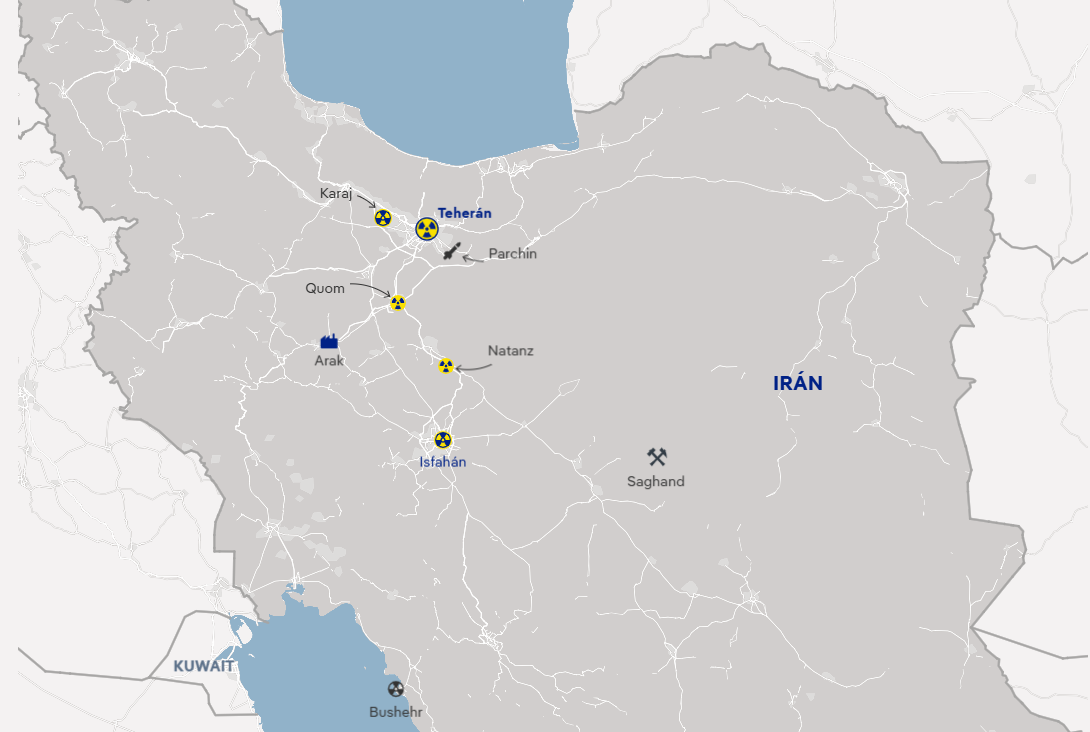
Official and expert voices under the magnifying glass
Positions in Washington and in European intelligence circles reflect the gravity of the moment. Experienced voices like former U.S. national security adviser John Bolton claim that Iranian strategy never left the arms track and that the only long-term solution is a regime change in Tehran. For their part, analysts like Damon Golriz warn that paradoxically, an Iran with nuclear weapons could end up being the unwanted legacy of the White House’s maximum pressure policies.
At the internal level of Iran, the great unknownite goes through the validity of the religious fact that historically prohibited the possession of weapons of mass destruction. After the death of former supreme leader Ali Khamenei and the rise of his successor Mojtaba Khamenei – who has so far avoided publicly ratifying this ban – the moderate sectors that opposed the bomb have been dangerously weakened, opening the door to a much more aggressive military doctrine.
Future projection of a balance at the edge of the abyss
The future of the Iranian nuclear programme is discussed between the dangerous opacity of its underground facilities and the inefficiency of a system of international inspections that is now hand-bound. Without the possibility of 60 per cent enriched uranium – at a 90 per cent military level – the international community operates under the uncertainty of not knowing whether Tehran has already made the irreversible decision to cross the atomic threshold.
The challenge for global diplomacy will be to break down a crisis where traditional channels of dialogue seem exhausted. If the inspectors fail to re-enter the military bases and the new Iranian dome chooses to break the Non-Proliferation Treaty, the Middle East – and the world – they will face a stage of geopolitical instability without return, where the ghost of the atomic bomb will no longer be a suspicion to become a lethal reality.