 Español
 Русский
 Deutsch
 Português
 Français
 Italiano
The European Union and China open a crucial negotiation to prevent a trade war
The EU and China are starting crucial negotiations in Beijing to stop a trade imbalance of EUR 36 billion and avoid a tariff war.

The European Trade Commissioner, Maros Sefcovic, will begin an official two-day visit to Beijing on Thursday, 8 October, to hold emergency meetings with high-level Chinese authorities. The central objective of the Brussels delegation is to contain the growing bilateral friction and to avoid the disintegration of trade relations,
a deficit for the European bloc of EUR 36 billion (approximately $40 billion).
The negotiations take place in a context of deep concern within European industry over what analysts and officials call “Chinese shock 2.0.” The concept refers to the massive penetration of industrial goods, technological vehicles and machinery from China at highly subsidized prices, affecting the competitiveness of the producers of the old continent.
Among the objectives set by the European Commission are three priorities: to slow the flow of Chinese imports in strategic sectors, to remove bureaucratic barriers to raise the sales of European companies on the Asian market and to ensure a stable supply of critical raw materials.
The claim for rare lands and Beijing’s response
One of the most friction points on the bilateral agenda is the provision of rare land and minerals essential for the energy transition and the defence industry. After China imposed controls and restrictions on export licences last year, the European Union requires greater transparency and certainty in supply chains to avoid industrial stoppages.
The possibility of agreeing on voluntary commitments to export quotas by China, covering such areas as electric and hybrid vehicles, has been raised from Brussels. However, sources close to the talks point out that the Xi Jinping Government strongly rejects the imposition of quotas and warned that it will respond firmly to any “discriminatory restrictive measure.”
It should be recalled that, in response to previous European research on the automotive sector, Beijing applied tariffs to imports of European cognac and opened files against the entry of pork and dairy products from the Community bloc.
Internal pressure and debate for new defensive tools
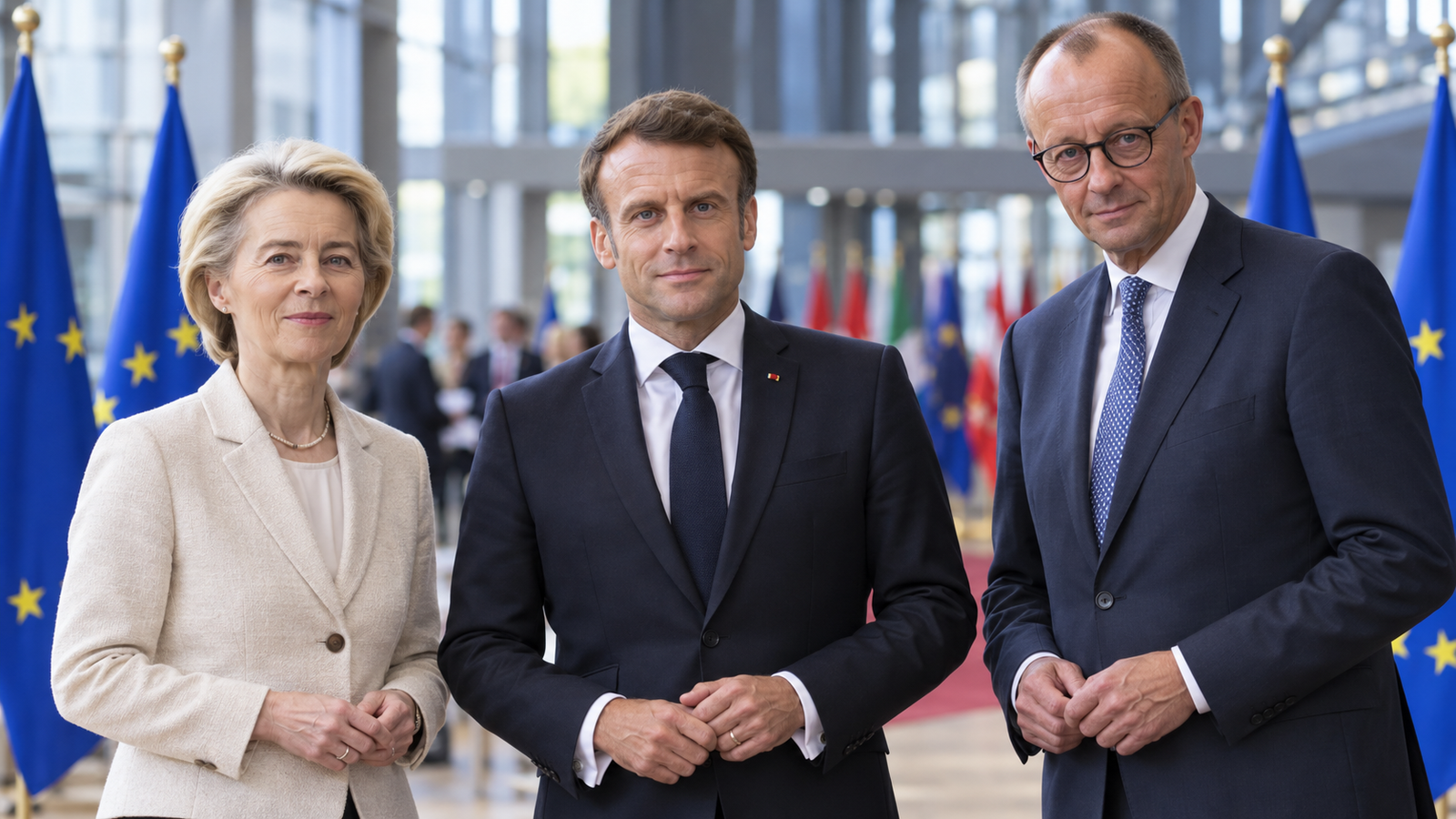
The position of the Community Executive has been strengthened in a coordinated manner with the main powers of the bloc. The President of France, Emmanuel Macron, and the Chancellor of Germany, Friedrich Merz, sent a joint letter to the President of the European Commission, Ursula von der Leyen, asking to speed up and expand the instruments of commercial defence.
Paris and Berlin are promoting the creation of mechanisms to quickly restrict access to the single market in cases of serious distortions.
In parallel, the Commission’s technical teams are making progress in the design of a tool inspired by Section 301 of US commercial law, a legal framework that would allow the EU to investigate unfair practices and apply automatic reprisals. The formal proposal will be presented to the block leaders at the December summit.
Despite the relevance of the meeting in Beijing, analysts from international organizations anticipate moderate progress in the talks, considering that specific agreements will be reached in technical matters, but not a framework of comprehensive understanding in the short term.