
 Español
 Русский
 Deutsch
 Português
 Français
 Italiano
Road to the shooting: Lula’s new network strategy to beat Flávio Bolsonaro
In view of the October 25 shooting, Lula da Silva is turning its digital strategy into social networks to reverse the advantage of Flávio Bolsonaro.

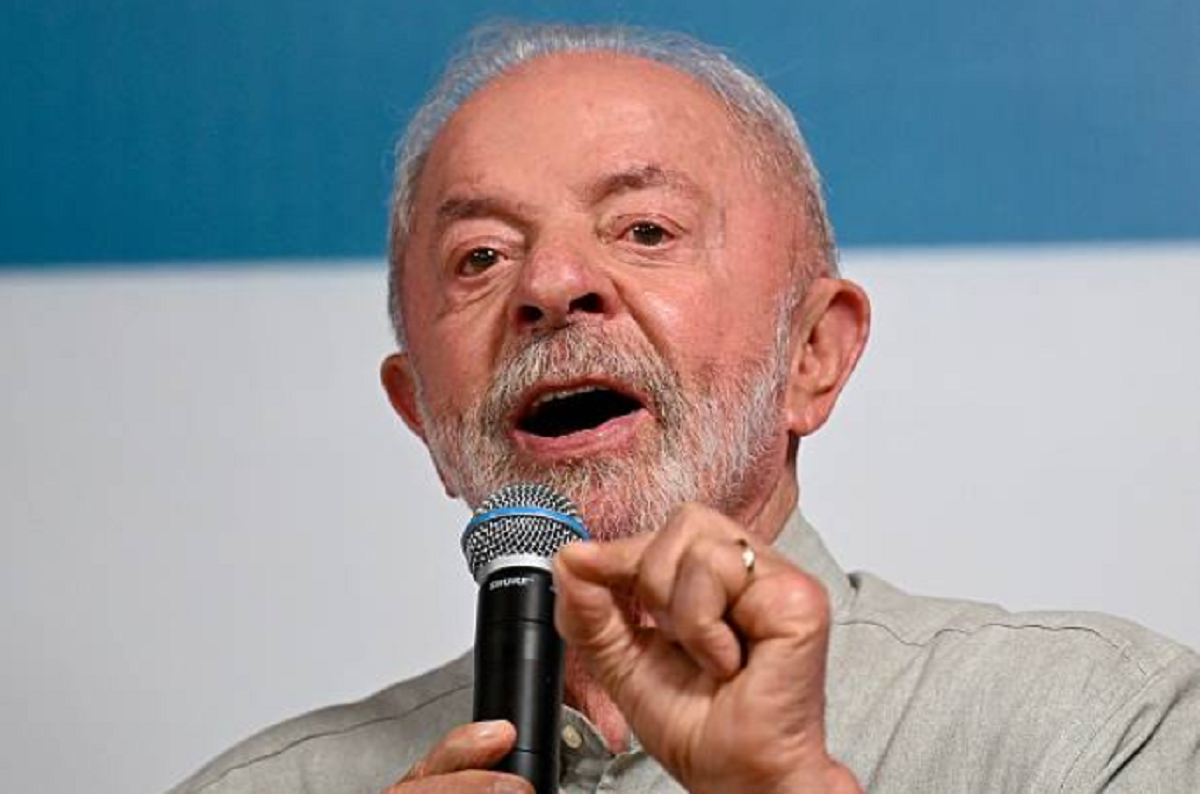
A few weeks after the decisive instance of October 25, the political scene in Brazil was shaken, forcing the official command to recalibrate its road map. After the end of the first round of elections to 2.2 million votes away from Flávio Bolsonaro, President Luiz Inácio Lula da Silva decided to break up with his traditional style of communication. Solemn discourses and rigid institutional acts gave way to a much more direct, daily and exclusively designed format for the cell screen.
With the cell phone in hand and in vertical format, the president began to publish contents recorded by himself to question the abstentionists and the young electorate. “People, let’s go to the street. We are going to talk to people,” Lula released in a video recorded this week, uncovering a communicational metamorphosis in which the first lady, Rosângela “Janja” da Silva, who is the promoter of a more deconstructed aesthetics to connect with the standing voter, influenced in a decisive way.
The eruption of the influences and the battle over the digital territory
The new architecture of the Workers’ Party (PT) campaign is not just based on the president’s figure. Aware of the historic hegemony that the Brazilian right has exercised in the digital ecosystem, since the officialism they have built up a network of containment made up of young legislators and influence with a massive volume of followers. Figures like the deputy Erika Hilton – with more than five million followers in Instagram – and Pedro Rousseff became central parts of the communication contest.
The armed forces also provide for the activation of instant messaging networks for the mobilization of base militants. Through WhatsApp channels such as the so-called “Lula Army,” promoted by the re-elected Member André Janones, the militancy receives daily slogans, audiovisual material ready to spread and patterns of interaction. The internal diagnosis is clear among the younger figures in space: the mobile phone became the most decisive campaign pamphlet in the country’s recent history.
The social agenda as a lead point: the debate on working day
Beyond aesthetic language and network viruleness, the PT strategy seeks to support itself in social flags with high popular impact. In the last few hours, Lula took advantage of its digital channels to cross directly to Flávio Bolsonaro and force a public definition of the work day reform. The proposal, aimed at ending the traditional 6×1 scale (six working days for one rest) to replace it with a 5×2 scheme with a limit of 40 hours a week without wage reduction, became the central focus of the political discussion prior to the shooting.
The project, originally driven in the House of Deputies by the PSOL space and approved with an overwhelming majority, is now under the orbit of the Senate. By pressing for early treatment before the October 25 elections, the government seeks to fit the opposition into an uncomfortable crossroads in front of the working class, with special appeal to the demands of free time, family reconciliation and household task distribution.
The regional mirror: digital polarization in Latin American politics
The campaign’s communicational turn in Brazil is part of a trend across Latin America, where the electoral contest is increasingly based on the algorithms of digital platforms than on traditional television or street mites. Recent electoral processes in the region have shown that social media narrative is decisive for mobilizing abstentionist stripes and for capturing disenchanted sectors that do not identify with traditional parties.
On that board, the Latin American left has been testing various formulas to break the initial advantage that conservative forces have taken in the intensive use of micrologging and disinformation. Brazil thus becomes a decisive political laboratory: Lula’s ability to assimilate the code of new generations without losing its popular profile will lead not only the future of the South American giant, but also the map of strategic alliances throughout the southern cone.
Statements and the voice of the protagonists in the electoral mud
“People bother me all the time. Janja gets up every day saying,” Come on, make yourself a selfie. “I don’t like it, but today I decided to do it,” Lula himself confessed with a distended tone during a meeting with content creators. He then raised the legislative bet: “The time has come to know who is who in this country. No bargain, it’s about reducing the working day to five days and two more rest days.”
For their part, from the younger ranks of space they recalled the urgency of methodological change. “Lula is going to lose the election if we don’t change the weaknesses of her campaign; the extreme right-hand one dominates the narrative on social networks,” Pedro Rousseff said. In the same vein, the elected deputy Ana Elisa Santos Silva, just 21, synthesized the new paradigm: “Today our most important campaign pamphlet is the mobile phone, and we work to incorporate the president in a way that feels comfortable.”
Conclusion: a race against the clock with an open outcome
In the polls of October 25, the election dispute in Brazil entered its most aggressive and uncertain phase. The PT’s decision to turn the traditional territorial structure into virtual terrain reflects that the officialism took note of the impact of the first round and seeks to give the vote-to-vote fight on each screen.
It remains to be seen whether the accelerated digital adaptation of an 80-year-old leader and the push of labour reform will move the faithful of the balance between the undecided and abstentionists. What is clear is that in this final line, between live broadcasts, WhatsApp groups and substantive parliamentary debates, Brazil plays much more than a presidential election: it defines the political and communicational model that will mark the pace of the region in the coming years.