
 Español
 Русский
 Deutsch
 Português (Brasil)
 Français
 Italiano
U.S. warns about political and reputational risks by investing in Nicaragua and denounces U.S. property confiscations
The United States Department of State issued a report on the investment climate in Nicaragua by 2026, in which it warns that investors should take precautions and cannot expect a & hellip;

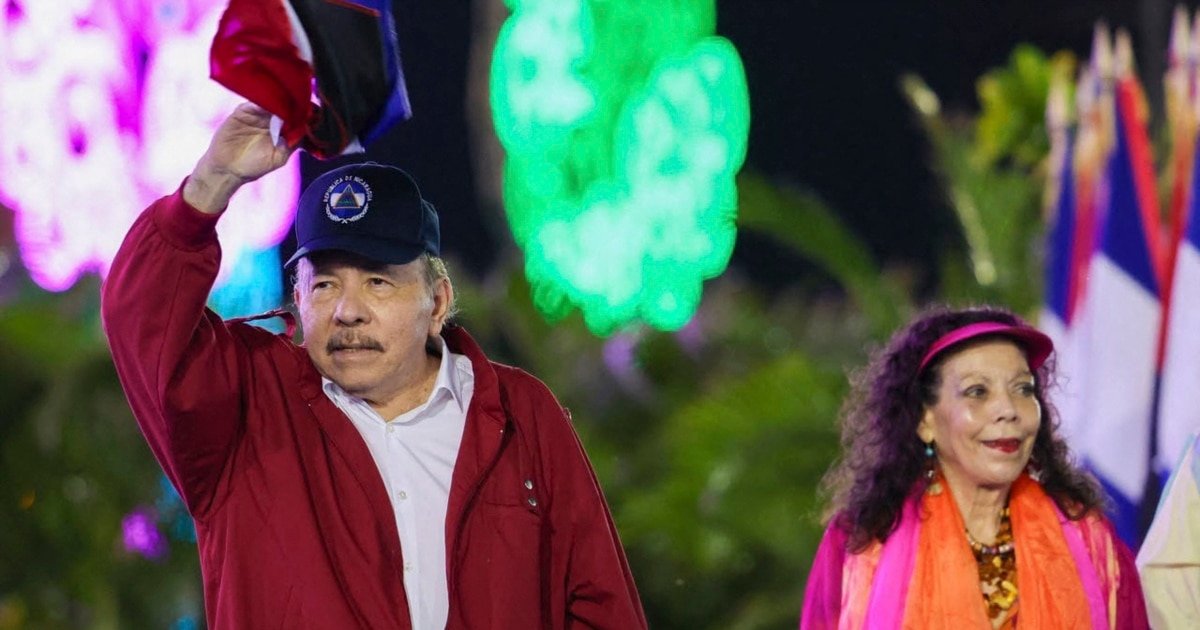
The United States Department of State issued a report on the investment climate in Nicaragua by 2026, in which it warns that investors should take precautions and cannot expect a rule of law or a predictable business environment in the country. The document, prepared by the Office of Economic, Energy and Business Affairs, notes that the Nicaraguan authorities continue to unjustly detain political prisoners, close NGOs, forcibly exiles citizens, appropriates private property and ignores and dismantle the rule of law, which creates a climate of investment that is full of political and reputable risks.
In parallel, the Nicaraguan Confidential media published an investigation into the confiscation of nine luxury houses belonging to American retirees on the beach of Tola in the South Pacific of Nicaragua. According to the report, the Office of the Attorney-General of Justice (PGJ) illegally confiscated the buildings and subsequently donated them to the Nicaraguan Social Security Institute (INSS). The houses, equipped with swimming pools, solar panels, furniture, appliances and personal belongings, were valued at approximately $15 million.
Nicaraguan economist Juan Sebastián Chamorro, quoted by Martí Noticias, stated that the owners of these houses are victims of the same policy of confiscation that has affected hundreds of Nicaraguans. Chamorro explained that President Daniel Ortega could be using these properties as negotiating documents, but warned that “he is playing with fire” because the measure impacts the real estate and tourist markets in the most tourist area of the country.
A former Nicaraguan diplomat in exile, who asked to remain anonymous for fear of reprisals, described the confiscations as a product of corruption and as a strategy to pressure the United States following the recent diplomatic tension caused by the rejection of the designated American ambassador. According to the source, the measure also seeks to demonstrate strength in the face of possible sanctions by the Organization of American States (OAS), which has set a 90-day period for the regime to respond to a resolution.
The State Department’s report also notes that, although Nicaragua has laws on foreign investment, its implementation, compliance and interpretation are subject to corruption and political pressure. Chamorro questioned how much the Nicaraguan economy would grow in the absence of a dictatorship that violates the rule of law and confiscates property, indicating that growth would be much greater if there were respected property rights, although it recognizes that this is a hypothetical scenario without current evidence.
The document recognizes Nicaragua’s economic potential, highlighting the abundance of natural resources, cheaper labour than its neighbours, a large agricultural sector and access to major maritime routes. However, it insists that, despite positive macroeconomic indicators, neither foreign direct investment nor labour participation have recovered following the civil unrest of 2018 and subsequent government repression.
In the political context, the report mentions the rejection of President Ortega and his wife, Vice President Rosario Murillo, to the appointment of a new US ambassador, which further isolates Nicaragua. Experts point out that the regime is based in China and Russia to remain in power, while the opposition welcomes the OAS resolution that sets time limits for the government of Ortega-Murillo. The United States supports this resolution against repression in Nicaragua.
Comentarios