
 Español
 Русский
 Deutsch
 Português (Brasil)
 Français
 Italiano
Giorgia Meloni defends Italian border controls with Spain and responds to opposition criticism
Giorgia Meloni defended the border controls with Spain in the Senate for security reasons and questioned the criticism of the Italian opposition following the migration crisis in Ceuta.

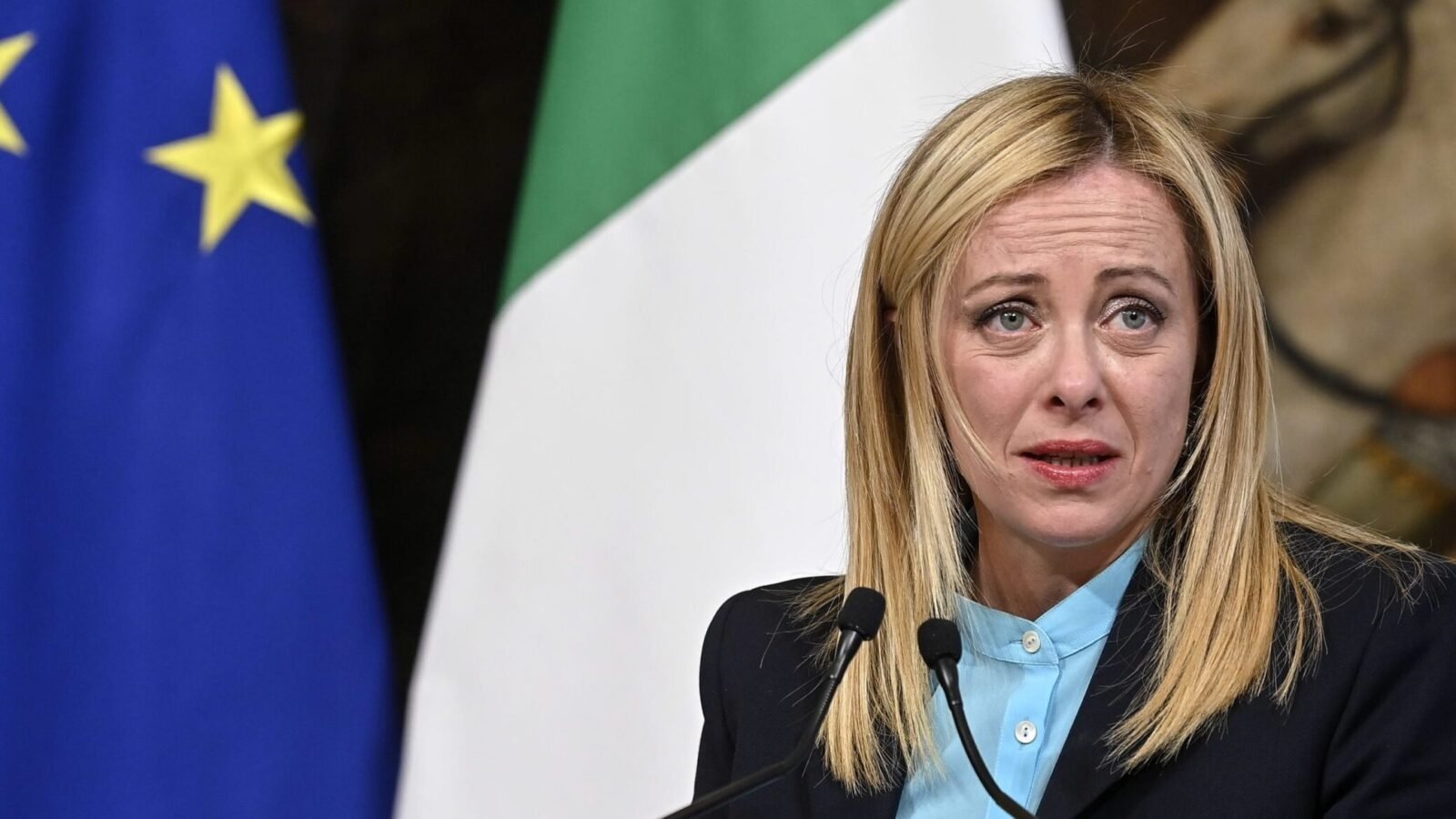
Italian Prime Minister Giorgia Meloni defended the decision of her Government to temporarily re-establish border controls with Spain on Wednesday, following the migration crisis in Ceuta in late July.
During its parliamentary appearance, the mandate stated that the restrictions are in line with security reasons and are covered by European legislation governing free movement within the Schengen area.
Meloni also questioned the criticism of the Italian opposition, which he accused of prioritizing the defense of the Spanish executive over the security interests of his own country.
Italy justifies border controls with Spain for security reasons
The Italian Government’s decision began to apply on the first of August, after the massive arrival of migrants in the Spanish autonomous city of Ceuta.
As the Prime Minister explained, the measure is to temporarily re-establish controls on air and maritime connections between Italy and Spain, without a general suspension of free movement throughout the European area.
The head of the Executive held that the decision was made on the basis of a security assessment and that it is in accordance with the provisions of the Schengen Border Code, which allows Member States to introduce internal controls in the light of certain circumstances relating to public order or security.
Meloni insisted that Italy has the right to use the same border protection mechanisms that other European countries have implemented at different times.
The Italian Government extended the restrictions for another 15 days
On 30 September, the Italian authorities announced a further extension of border controls for an additional 15 days.
The decision responded, according to the Executive, to the continued presence of the circumstances that had led to the initial implementation of the restrictions.
In this way, Rome maintained security checks at certain points of entry from Spain, while continuing to assess the evolution of the migration situation.
For Meloni, this is a preventive and time-limited response, supported by the legal instruments available to the EU countries.
Meloni questions the opposition for its criticism of the measure
One of the central moments of parliamentary intervention was marked by the Prime Minister’s statements against the parties that questioned the decision to strengthen the controls.
Meloni was surprised at the political impact of the measure and considered the criticism received to be disproportionate.
The President said that some opposition sectors seemed more interested in supporting the Spanish Government than in discussing Italy’s security needs.
His statements were addressed especially to the Democratic Party, led by Elly Schlein, one of the main opposition forces and traditional political ally of the Spanish Socialist Workers’ Party.
The Prime Minister rejected that the use of control mechanisms provided for in European law can be considered an exceptional measure when it is Italy that decides to implement them.
The Prime Minister claims the same treatment as other European countries
In his presentation to the senators, Meloni used the background to the application of the Schengen Code to support his position.
According to the figures mentioned by the mandate, Member States have used the temporary re-introduction of border controls about five hundred times since the year two thousand six.
It also noted that on 30 occasions these restrictions directly affected Italy.
As an example, he recalled that France has maintained control mechanisms at its borders with Italian territory for more than a decade.
With this background, Meloni argued that his Government could use a tool previously used by other European partners.
The migration crisis in Ceuta and its consequences for European relations
The origin of the dispute is the arrival of a large number of migrants in Ceuta in the last days of July, a situation that led the Italian Executive to review the security conditions of their connections with Spain.
The decision opened a political debate on the limits of free movement within the European Union and national powers to re-establish controls when the authorities consider that there are security risks.
The Schengen area allows the movement between the participating countries without systematic controls at their internal borders. However, its rules provide for temporary exceptions under certain conditions.
In this context, the Italian Government maintains that the restrictions adopted do not contradict European obligations, but are in accordance with a power granted to the Member States.
The debate on security and free movement in Europe
The dispute also reflects the differences between European political forces with regard to migration management and border protection.
While Meloni presents the restrictions as a security measure in accordance with Community law, his statements to the Senate show that the decision has become a new ground for confrontation with the opposition.
The Prime Minister believes that the debate should focus on Italy’s ability to take preventive measures within the European legal framework.
For their part, the political criticism mentioned during the appearance has placed the controversy in the field of relations with Spain and the interpretation of the rules of free movement.
Italy maintains its position on controls within the Schengen area
At the end of his speech, Giorgia Meloni reiterated that his Government did not intend to apply a different approach to that used by other European countries.
The President said that Italy must have the same tools available to its European Union partners when it comes to responding to situations that the authorities consider relevant to national security.
Its main argument is that temporary border controls are part of the mechanisms provided for in Schengen law and that their implementation is not, in itself, an extraordinary measure.
The dispute will continue to be linked to the evolution of the migration situation and the decisions made by the Italian Executive on the continuity of the restrictions.
For the time being, Meloni continues to defend controls with Spain and rejects the accusations of those who question the decision, insisting that Italy should be able to exercise the same border security powers as the rest of the European States.

Comentarios