
 Español
 Русский
 Deutsch
 Português (Brasil)
 Français
 Italiano
They steal in France a monumental work of 210 kilos with cover of Salvador Dalí
Offenders removed from a museum in Auvergne a valuable and historic piece of literature with surreal design, adding to a wave of attacks on cultural heritage throughout Europe

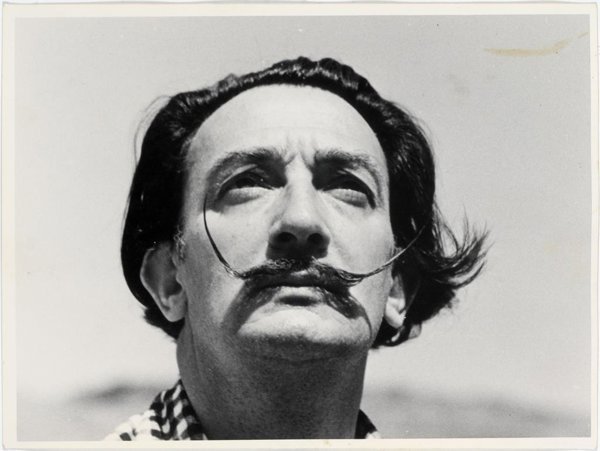
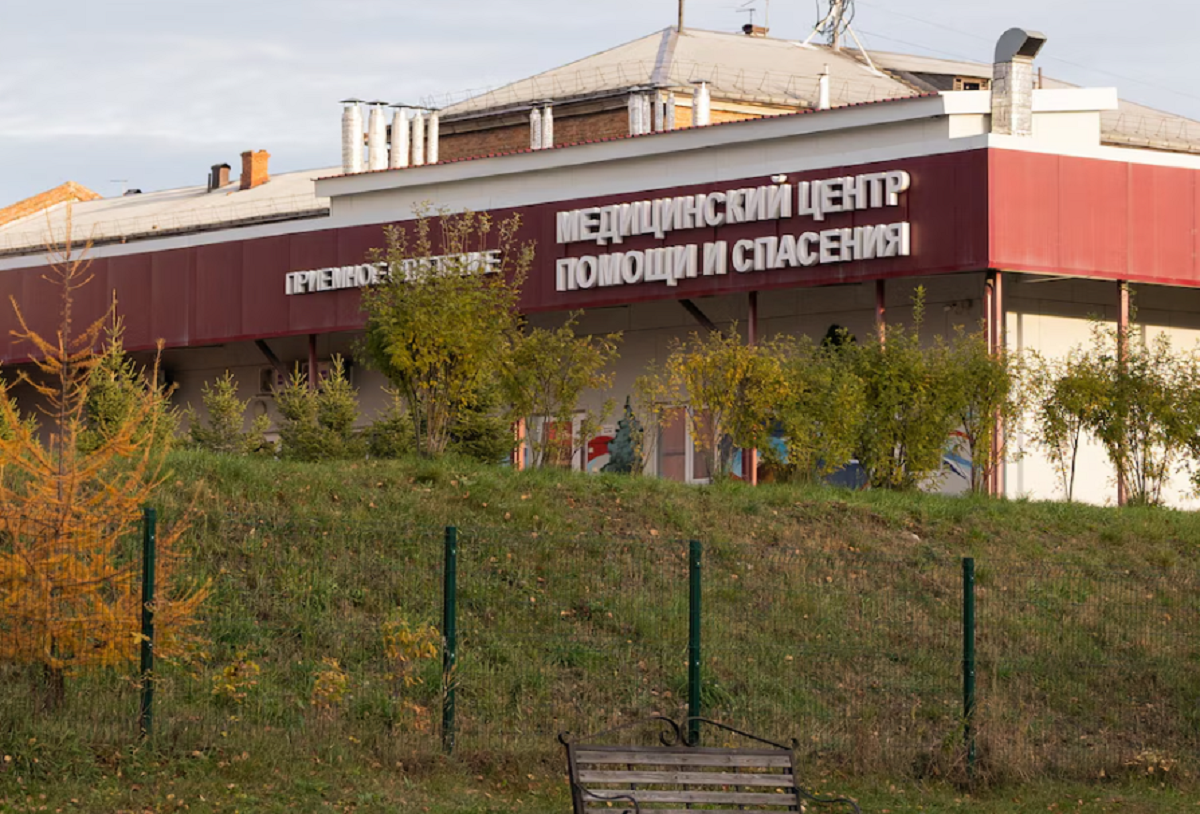
The world of art is dazzled after being confirmed one of the most bold and logistically complex heritage assaults of recent times. In the morning of this Monday, a group of criminals managed to violate the security systems of the contemporary art centre of Issoire, located in the peaceful French region of Auvergne, to take away a treasure of unspeakable value. This is the historic Book of Revelation, a monumental work conceived by the editor Joseph Forêt, which stands out not only for his literary rarity, but for his imposing physical structure crowned by the Spanish surreal genius.
The assault, which Clermont-Ferrand’s prosecution confirmed, took place on the night strip that links Sunday, 4, to Monday, 5 October, has bewildered the investigators. The local gendarmerie, which has already taken full control of the criminal investigation, faces the challenge of deciphering how a criminal gang managed to extract and transport a piece that in its entirety reaches 210 kilograms of weight, without immediately alerting the security forces or the neighbours of the area.
The physical and symbolic magnitude of the removed piece
The stolen copy is not a book in the traditional sense of the term. It was imagined and materialized as a total work of art, an ambitious editorial project that merged sacred literature with avant-garde sculpture. The most dazzling and heavy feature of this jewel is its front cover, carved entirely in bronze by Salvador Dalí himself, who alone has a weight of about 150 kilos.
The logistics needed to move such a structure requires not only physical force, but also millimetric planning, suitable vehicles and a deep knowledge of the blind points of the enclosure. This level of sophistication suggests that it is not an improvised theft, but a specific commission orchestrated by a criminal network highly specialized in the trafficking of cultural property.
The pain of the custodians and the impact on the community
The news has fallen as a bucket of cold water on the French and international artistic community. Christian Karoutzos, owner of the art gallery and main custodian of the book, did not hide his desolation by facing the local media. With the voice broken by the impotence, he described the fact not only as a crime against property, but as a direct attack on his country’s historical identity.
“It is a masterpiece, worthy of a cathedral, unique in the world,” the collector said to the news portal ICI Pays d’Auvergne. His later words reflected the depth of the emotional wound that this kind of crime generates in those who dedicate their lives to preserving beauty: “France was killed last night, the French heritage was killed.” This painful metaphor perfectly illustrates the irreplaceable vacuum that leaves the disappearance of a work that transcends its economic value to become a pillar of the collective acquis.
A worrying epidemic of attacks on historical sites
Unfortunately, the emptying of the room in Issoire is far from an isolated incident. The Interpol authorities and national police throughout the region are extremely concerned about an upward trend in attacks on museums, galleries and exhibition sites. Organized bands seem to have found in art and archaeological treasures an extremely lucrative loot, taking advantage of the structural vulnerabilities of sites that do not always have millionaire budgets for state-of-the-art security.
The most resonant and cinematic antecedent of this criminal wave took place just a year ago, on 19 October 2025, at the Louvre Museum of Paris itself. In an operation that lasted just between seven and eight minutes, and executed in broad daylight during the usual time of visits, the thieves managed to evade the guards’ eyes to remove nine invaluable pieces belonging to the French Crown Jewels from the emblematic Apollo Gallery.
To this scandalous episode is added another recent blow on French territory, when two individuals violently broke into a museum dedicated to Impressionist master Pierre- Auguste Renoir. On that occasion, the criminals tried to take four canvases valued in the $10 million friolera, although pressure during the frenzy flight forced them to leave two of the works on the way.
The complex tracking in the international black market
The Iberian peninsula has also not been alien to this property bleeding. In August, the Sicantine town of Villena in Spain suffered the brutal looting of its historical treasure. In a fast operation that did not exceed four minutes, the assailants burst the vitrines to take away an invaluable archaeological set composed of gold, silver, iron and amber dating from the Bronze Age. As if it were little, the criminals also carried three historic crowns of the Virgin and the Child that guarded the center.
The fate of these pieces is often a true enigma for researchers. Works as universally recognized as Dalí’s cover are impossible to place on the legal market or in auction houses. The experts point to two main scenarios: the extortion of the work to demand a rescue from the insurers or the state, or its direct and clandestine sale to unscrupulous private collectors operating in the shadows of the Asian or Eastern European market. At worst, precious metal parts are at risk of melting, which would represent the definitive and irreversible destruction of the work.
Meanwhile, in the quiet town of Issoire, the doors of the museum remain guarded by agents who collect prints, review security cameras and cross data with international agencies, keeping alive the fragile hope of recovering intact the Apocalypse of Forêt and Dalí before it disappears forever in the opacity of the global black market




Comentarios
Los comentarios están cerrados para esta noticia.